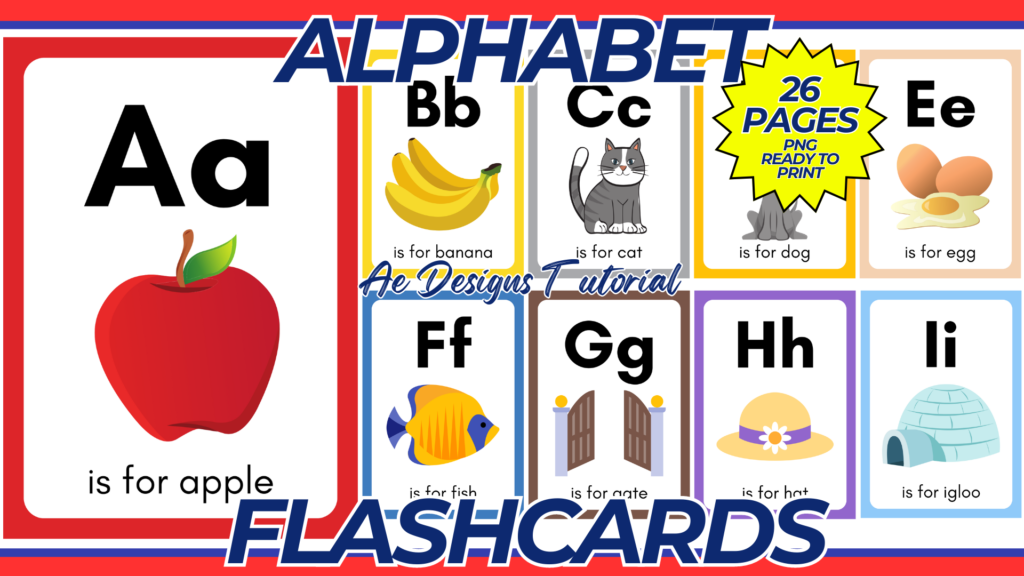
Alphabet flash cards are a fantastic tool for helping children learn and recognize letters. They are versatile, easy to use, and can be employed in a variety of educational activities. Here’s a comprehensive guide to creating and using alphabet flash cards effectively.
1. Designing Alphabet Flash Cards
Materials Needed:
- Cardstock or thick paper
- Printer
- Scissors
- Laminator (optional)
- Markers or crayons (for handmade cards)
Designing the Cards:
- Size: Flash cards should be large enough for children to see clearly. A common size is 4×6 inches.
- Font: Use a large, clear, and simple font. Sans-serif fonts are usually the best choice for readability.
- Colors: Use bright, engaging colors. Different colors for vowels and consonants can help children differentiate them.
- Images: Include an image that starts with the letter on each card (e.g., A for Apple, B for Ball). This helps with letter-sound association.
Creating Digital Flash Cards:
- Choose a Template: Many websites offer free templates for flash cards. Sites like Canva and Adobe Spark have pre-designed templates that you can customize.
- Add Letters and Images: Insert the letter in a large font at the top of the card and an image of an object that starts with that letter below it.
- Print and Cut: Print the flash cards on cardstock and cut them out. Laminating the cards will make them more durable.
Handmade Flash Cards:
- Cut the Cardstock: Cut cardstock into 4×6 inch pieces.
- Write the Letters: Write one uppercase and one lowercase letter on each card.
- Draw or Paste Images: Draw or glue pictures that correspond to each letter.
2. Using Alphabet Flash Cards
Introduction to Letters:
- Daily Practice: Introduce a few letters at a time. Show the child the letter, say its name, and then show the picture that corresponds to it.
- Repetition: Repetition is key. Go over the same letters multiple times until the child is familiar with them.
Games and Activities:
- Matching Game: Have two sets of flash cards. Lay them face down and have the child turn over two cards at a time, trying to find matching pairs.
- Letter Hunt: Hide flash cards around the room and have the child find them. When they find a card, they should say the letter and the sound it makes.
- Alphabetical Order: Mix up the flash cards and have the child put them in alphabetical order.
- Memory Game: Use the cards to play a memory matching game. Place all cards face down and take turns flipping two over at a time, trying to find matches.
- Sound Association: Show a card and ask the child to name an object that starts with that letter.
Incorporating Flash Cards into Daily Routine:
- Morning Routine: Use flash cards during breakfast to start the day with a quick review.
- Bedtime: Go through a few flash cards as part of the bedtime routine.
- On the Go: Carry a small set of flash cards for practice during car rides or waiting times.
Advanced Activities:
- Spelling: Use flash cards to spell simple words. Lay out the cards for each letter of the word and have the child arrange them in the correct order.
- Storytelling: Choose a few flash cards and create a simple story using the objects on the cards. This helps with both letter recognition and creativity.
- Phonics: Use the cards to teach phonics by focusing on the sounds that each letter makes.
3. Benefits of Alphabet Flash Cards
Visual Learning:
- Flash cards provide a visual representation of letters and their corresponding sounds, aiding in memory retention.
Interactive Learning:
- Flash cards make learning interactive and engaging, keeping children interested and motivated.
Versatility:
- Flash cards can be used in various games and activities, making them a versatile educational tool.
Reinforcement:
- Regular use of flash cards reinforces letter recognition and helps with the transition to reading.
Development of Fine Motor Skills:
- Handling flash cards can help develop fine motor skills, as children practice picking up, holding, and manipulating the cards.
4. Tips for Effective Use
Consistency:
- Practice regularly but keep sessions short to maintain the child’s interest and attention.
Positive Reinforcement:
- Praise and encourage the child’s efforts. Use positive reinforcement to build confidence and motivation.
Variety:
- Use a variety of activities and games to keep learning fun and engaging.
Involvement:
- Involve the child in the creation process. Let them choose colors, draw images, or even help write letters.
Adaptation:
- Adapt activities to suit the child’s learning pace and style. Some children may benefit from more visual aids, while others may need more hands-on activities.
Conclusion
Alphabet flash cards are an invaluable tool in early childhood education. They provide a fun and engaging way for children to learn and recognize letters, which is a crucial step in the process of learning to read and write. By designing effective flash cards and incorporating a variety of activities, you can make learning the alphabet a joyful and rewarding experience for children.
NOTE: Isa isahin nyo na lang ung LINK anjan din kasi ung mga MATERIALS na pwede magamit at ung FILES.
Materials ALPHABET FLASHCARD
Click here: https://bit.ly/3REjSJX
Click here: https://bit.ly/3VHKbQf
Click here: https://bit.ly/3OZg2t9
Click here: https://bit.ly/3P5RM93
Click here: https://bit.ly/3V0JCST
Click here: https://bit.ly/4ctrveY