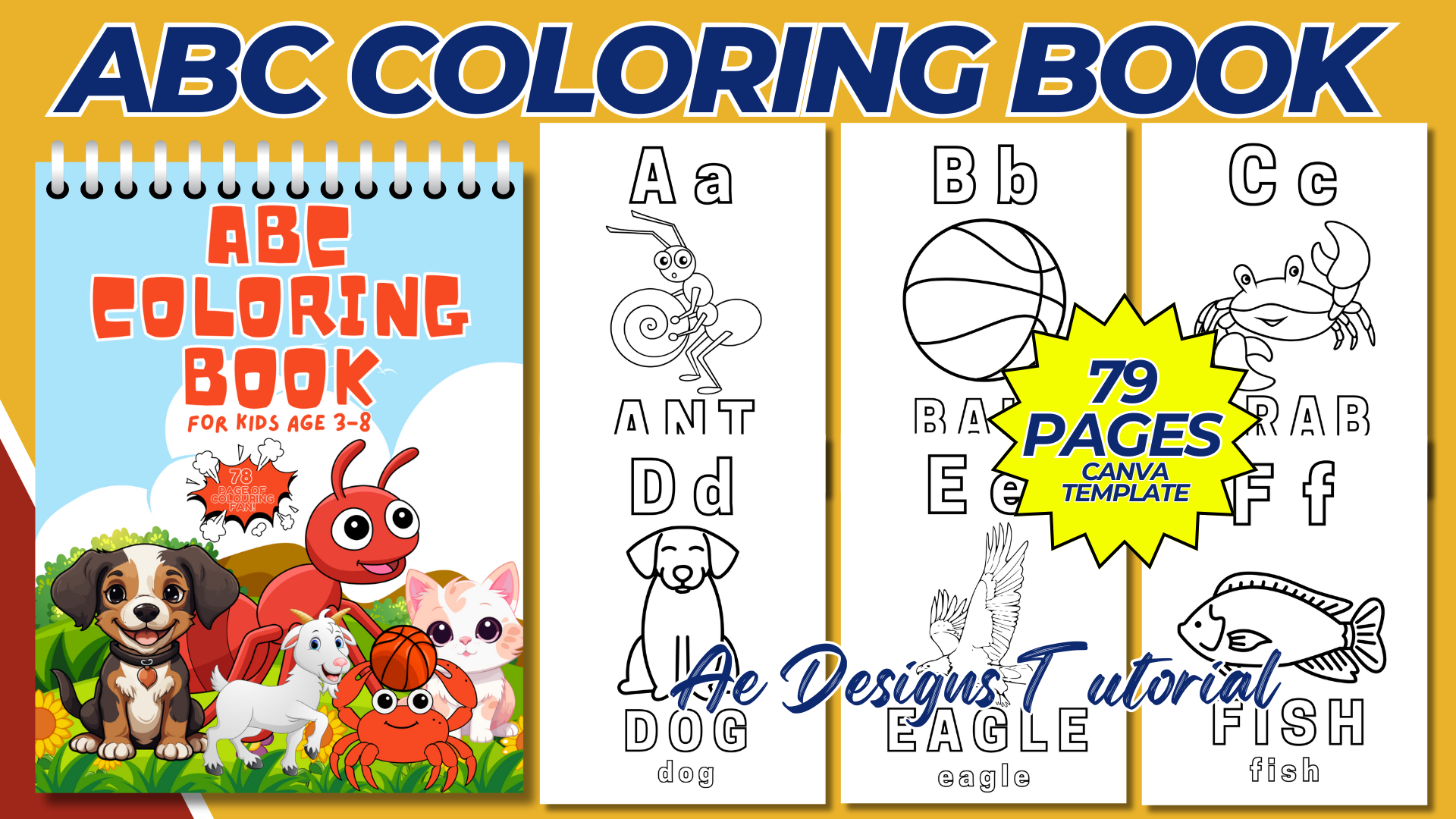

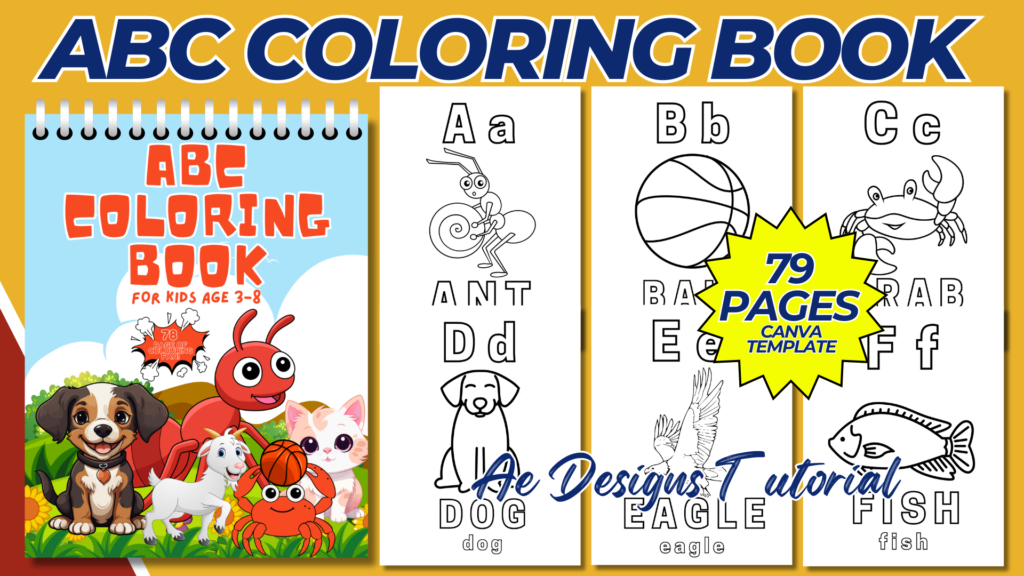
An ABC Coloring Book Template is a creative and educational tool designed to help children learn the alphabet while engaging in a fun, hands-on activity. Here’s a detailed guide to creating an effective ABC coloring book template:
1. Overall Concept
- Theme: The ABC coloring book template should be organized by letters, with each page representing one letter of the alphabet (A to Z).
- Objective: Each page should include a large, bold letter, a corresponding word, and an illustration for children to color. This encourages letter recognition, vocabulary building, and creativity.
2. Page Layout
- Size: The standard page size for an ABC coloring book is A4 (8.27 x 11.69 inches), but it can also be adjusted for other sizes like letter size (8.5 x 11 inches).
- Margins: Ensure that there is enough margin space (about 0.5 inches) around the edges for printing and binding.
- Orientation: Typically, the pages are portrait orientation, but landscape can be used if it suits the design better.
3. Design for Each Letter
- Large Letter: Display the letter in uppercase prominently at the top of the page, with a corresponding lowercase letter underneath it or next to it.
- Word Association: Include a simple word starting with that letter, such as:
- A is for Apple.
- B is for Ball.
- Illustration: Provide a black-and-white outline of an object or animal that represents the word. For example, an apple for “A” or a ball for “B,” allowing children to color it in.
- Traceable Letters (Optional): Include dotted lines of the uppercase and lowercase letters at the bottom of the page so kids can trace and practice writing the letter.
4. Typography
- Font for Letters: Use bold, clear, and large sans-serif fonts for both uppercase and lowercase letters. These should be easy for children to recognize and trace if desired.
- Word Text: The word text should be legible and written in a simple, child-friendly font, typically in a size large enough for children to read easily.
5. Illustrations
- Style: Use simple, child-friendly illustrations with thick outlines to make them easy to color. The style should be consistent throughout the book, avoiding overly detailed or complex images.
- Positioning: The illustration should be placed below or next to the letter and word so that it creates a visual association between the letter and the object.
6. Coloring Areas
- Large Coloring Spaces: Ensure that the illustrations have large, open spaces for children to color in. Avoid too many small, intricate details that might frustrate younger children.
- Simple Shapes: Use basic shapes and clear outlines to ensure easy coloring.
7. Educational Value
- Learning Objectives: Beyond just coloring, each page should reinforce the letter-sound relationship, helping kids to connect letters with familiar objects.
- Vocabulary Building: Include a wide range of words to introduce new vocabulary while also using common objects that young children can easily recognize.
- Phonics: The word should be simple and phonically accurate to help children associate the sound with the letter.
8. Cover Page
- Title: A fun and bold title, such as “My ABC Coloring Book” or “Color and Learn: ABCs.”
- Illustrations: The cover could feature a mix of items from inside the book, such as a colorful apple, ball, and cat, to give children an idea of what to expect.
- Name Area: Include a space for children to write their names, making the book feel personalized.
9. File Formats
- Editable File: Provide the template in an editable format like Canva, Adobe Illustrator, or Microsoft Word so it can be customized.
- Printable PDF: Offer the final template in high-resolution PDF format (300 DPI) for easy printing.
- Black-and-White Print: The entire template should be in black-and-white to allow kids to color the illustrations and letters.
10. Additional Pages
- Letter Tracing Practice Pages: In addition to coloring, include optional tracing pages where children can practice writing uppercase and lowercase letters.
- Alphabet Chart: Add an alphabet chart at the beginning or end of the book to reinforce letter recognition.
- Review Pages: Toward the end of the book, include review pages where kids can color all the letters and objects again in a smaller format or match letters to their corresponding pictures.
11. Print-Ready Settings
- Resolution: Ensure that all images and text are high-resolution (300 DPI) to ensure clean, crisp printing.
- File Types: Provide the file as a high-quality PDF for easy home printing or professional printing at a copy shop.
12. Binding and Usage
- Binding: If you’re offering the template for physical printing, suggest spiral binding or stapling for easy flipping through the pages.
- Interactive Elements: Encourage the use of the book as part of a learning routine where children can color a new letter each day, helping to reinforce daily alphabet learning.
By using this ABC Coloring Book Template, educators and parents can create a fun, interactive, and educational resource for young learners.
NOTE: Isa isahin nyo na lang ung LINK anjan din kasi ung mga MATERIALS na pwede magamit at ung FILES.
MATERIALS & FILES: ABC COLORING BOOK
CLICK HERE: https://bit.ly/3REjSJX
CLICK HERE: https://bit.ly/3AS2mMC
CLICK HERE: https://bit.ly/3LeqsCW
CLICK HERE: https://bit.ly/4cUZEmA
CLICK HERE: https://bit.ly/47mjmqn