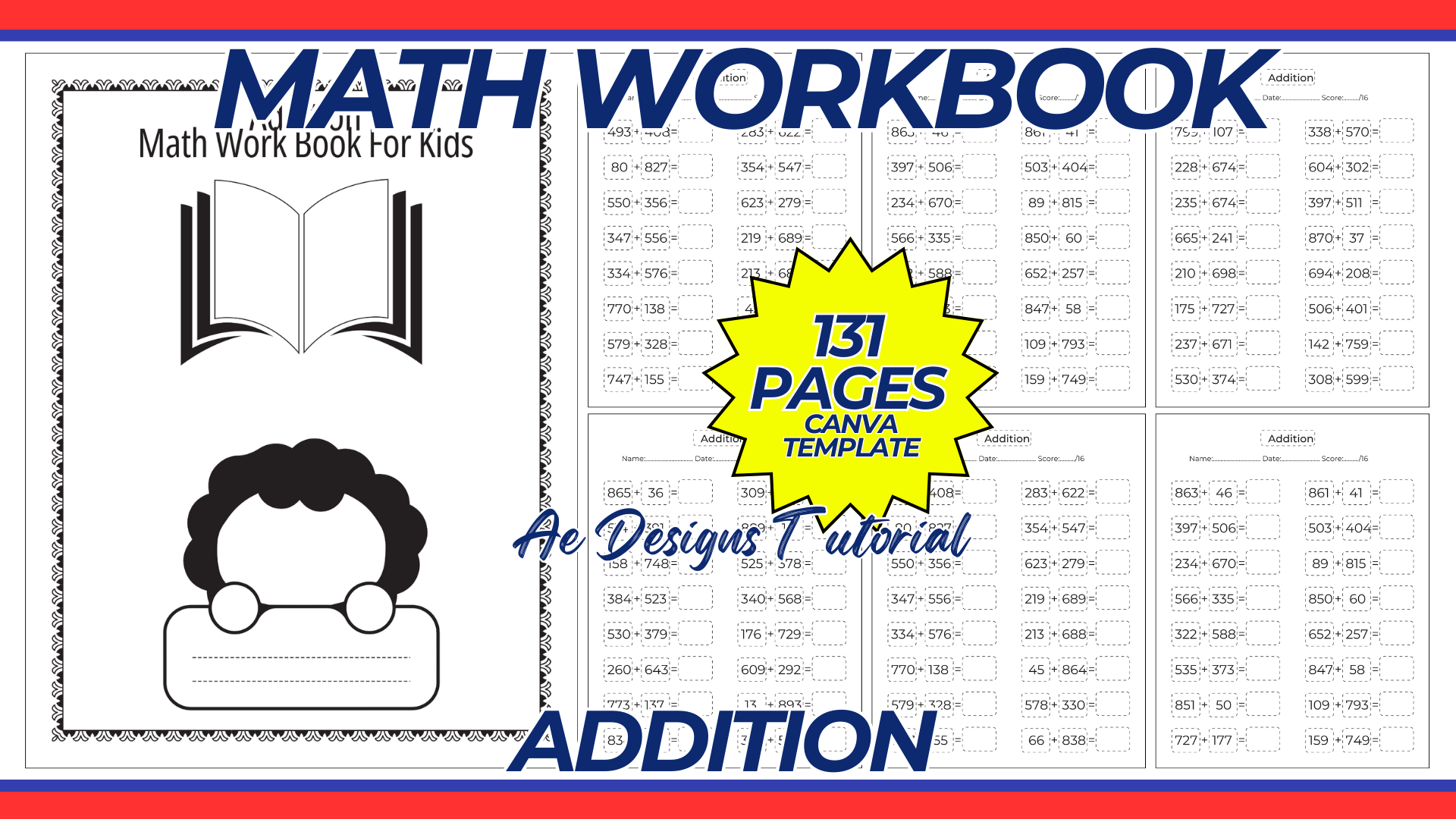

Creating an addition math workbook involves organizing content that progressively challenges students while maintaining engagement. Below is a comprehensive guide to developing an effective addition math workbook:
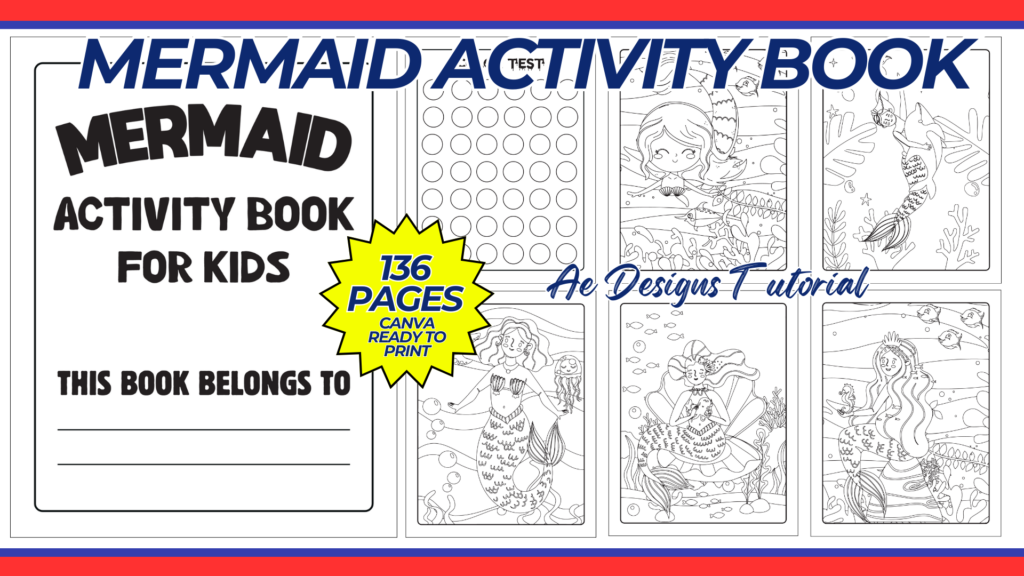
1. Cover Page:
- Title: “Addition Math Workbook”
- Subtitle: Include the target grade level (e.g., Grades 1-3).
- Design Elements: Use vibrant colors and illustrations (like numbers, mathematical symbols, or friendly characters) to make the cover inviting.
- Author/Brand: Add your name, school, or brand logo at the bottom.
2. Introduction Page:
- Purpose: Briefly explain the goals of the workbook, such as improving addition skills, understanding basic concepts, and building a strong foundation in mathematics.
- How to Use: Provide instructions on how to navigate the workbook, including any tips for parents or educators.
3. Table of Contents:
- Structure: List out all sections or chapters, so students know what to expect. For example:
- Basic Single-Digit Addition
- Adding with Number Lines
- Two-Digit Addition (Without Carrying)
- Two-Digit Addition (With Carrying)
- Word Problems
- Fun Math Games and Puzzles
- Answer Key
4. Sections and Content:
A. Basic Single-Digit Addition:
- Worksheets: Start with simple problems (e.g., 2 + 3 = __). Include large, clear spaces for answers.
- Visual Aids: Use objects, like apples or stars, to help students visualize the addition process.
- Practice: Provide plenty of practice problems to ensure mastery.
B. Adding with Number Lines:
- Introduction: Explain how to use a number line for addition.
- Worksheets: Include number lines below the problems (e.g., 4 + 2 = __) where students can draw jumps to find the answer.
- Exercises: Gradually increase difficulty, starting with smaller numbers and moving to larger ones.
C. Two-Digit Addition (Without Carrying):
- Explanation: Show how to align numbers by place value and add from right to left.
- Worksheets: Offer problems where students add two-digit numbers that do not require carrying (e.g., 23 + 14 = __).
- Visual Aids: Include place value charts if necessary.
D. Two-Digit Addition (With Carrying):
- Concept: Teach the concept of carrying over numbers in addition.
- Step-by-Step Examples: Provide clear, step-by-step examples with explanations.
- Practice Problems: Include a variety of problems that require carrying.
- Tips: Offer tips on how to handle carrying, such as writing small numbers above the next column.
E. Word Problems:
- Contextual Learning: Create word problems that incorporate real-life scenarios, such as “Sally has 5 apples, and her friend gives her 3 more. How many apples does she have now?”
- Illustrations: Use pictures to help visualize the problems.
- Critical Thinking: Include more complex problems that require multiple steps.
F. Fun Math Games and Puzzles:
- Math Puzzles: Incorporate puzzles like crosswords or Sudoku that involve addition.
- Interactive Games: Suggest simple games that parents and students can play together, such as “Addition Bingo” or “Math Matching Cards.”
- Rewards: Add a rewards system where students earn stickers or points for completing each section.
G. Review Sections:
- Cumulative Practice: Provide mixed problems that combine all the skills learned so far.
- Timed Tests: Offer timed tests to help improve speed and accuracy.
H. Answer Key:
- Complete Solutions: Include an answer key at the end of the workbook for parents or teachers to check the students’ work.
- Explanations: Where necessary, provide brief explanations or steps for solving more complex problems.
5. Progress Tracker:
- Chart: Include a progress tracker where students can mark off each section they complete.
- Encouragement: Add motivational quotes or fun facts related to math to keep students engaged.
6. Certificate of Completion:
- Reward: Design a certificate that students can earn after completing the workbook. This serves as motivation and a sense of accomplishment.
7. Final Notes:
- Extra Resources: Provide additional resources or references for continued learning, such as websites, apps, or books.
- Feedback Section: Encourage students or parents to give feedback on the workbook to help improve future editions.
Design and Layout:
- Consistent Layout: Keep the layout clean and consistent throughout the workbook. Use headers, footers, and page numbers for easy navigation.
- Font and Spacing: Use a large, easy-to-read font with adequate spacing between problems to ensure clarity.
- Color and Images: Incorporate colors and images sparingly to enhance the workbook without overwhelming the content.
Printing and Distribution:
- Format: Offer the workbook in both print and digital formats.
- Binding: Consider spiral binding for easy page-turning and durability.
- Distribution: Make the workbook available through online platforms, bookstores, or educational institutions.
This structure will help create a comprehensive and engaging addition math workbook that effectively supports students in building their addition skills while keeping the learning process fun and interactive.
NOTE: Isa isahin nyo na lang ung LINK anjan din kasi ung mga MATERIALS na pwede magamit at ung FILES.
Materials MATH WORKBOOK ADDITION
Click here: https://bit.ly/3Y0Z2IF
Click here: https://bit.ly/3RYUZsg
Click here: https://bit.ly/46XnbSQ
Click here: https://bit.ly/3TNClnc
Click here: https://bit.ly/3LeqsCW