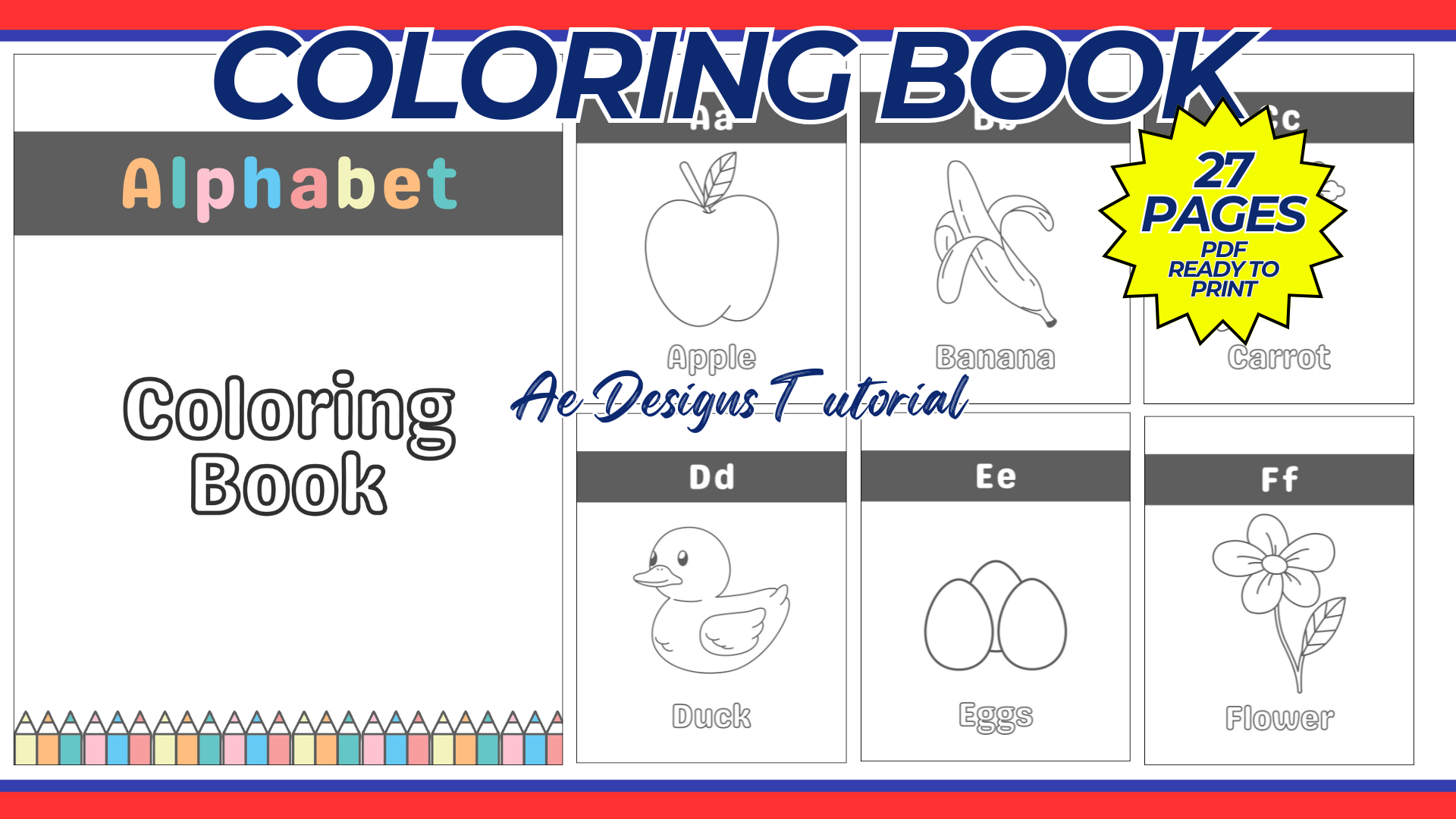

An alphabet coloring book is an excellent educational tool for young children learning their ABCs. It combines the fun of coloring with the educational benefit of familiarizing kids with letters and associated objects or animals. Here is a comprehensive guide on creating an engaging and educational alphabet coloring book for kids on A4 size bond paper.
1. Purpose and Benefits
The primary purpose of an alphabet coloring book is to help children:
- Recognize and memorize the letters of the alphabet.
- Associate letters with words and images.
- Develop fine motor skills through coloring.
- Enhance creativity and imagination.
2. Materials Needed
- A4 size bond paper (standard size: 8.27 x 11.69 inches)
- Computer with design software (Canva, Adobe Illustrator, Microsoft Word, etc.)
- Printer (preferably color, but black and white will also work)
- Coloring tools (crayons, colored pencils, markers)
- Binder or stapler (for compiling the book)
3. Designing the Alphabet Coloring Pages
Layout and Design Elements: Each page of the coloring book should feature:
- Large Letter: Prominently display the uppercase and lowercase versions of the letter.
- Illustration: An image of an object, animal, or item starting with the letter.
- Word: The name of the object, written clearly under the image.
Step-by-Step Design Process:
- Open Your Design Software:
- Choose a template size that matches A4 dimensions (8.27 x 11.69 inches).
- Create a Template for Each Letter:
- Set a consistent layout for each page. For instance, the letter at the top, the illustration in the middle, and the word at the bottom.
- Add the Letter:
- Use a large, child-friendly font for the uppercase and lowercase versions of the letter. Place them prominently on the page.
- Insert the Illustration:
- Choose simple, clear images that are easy to recognize and color. For example, for the letter “A”, you could use an image of an apple, alligator, or airplane.
- Add the Word:
- Write the name of the object or animal under the illustration in a clear, readable font.
- Repeat for All Letters:
- Create a page for each letter from A to Z.
Example Pages:
- A:
- Letter: A a
- Illustration: Apple
- Word: Apple
- B:
- Letter: B b
- Illustration: Ball
- Word: Ball
- C:
- Letter: C c
- Illustration: Cat
- Word: Cat
4. Printing and Compiling the Book
Printing:
- Print each page on A4 size bond paper. Use high-quality settings to ensure the illustrations are clear and easy to color.
Compiling:
- Arrange the pages in alphabetical order.
- Bind the pages together using a binder, stapler, or by punching holes and using ribbon or string.
5. Engaging Activities with the Coloring Book
Coloring:
- Provide a variety of coloring tools such as crayons, markers, and colored pencils.
- Encourage children to color each letter and its corresponding illustration.
Learning the Alphabet:
- As children color, help them pronounce the letter and the word associated with it.
- Discuss the sound each letter makes and other words that start with the same letter.
Interactive Activities:
- Letter Hunts: After coloring, ask children to find objects around the house or classroom that start with the letter they just colored.
- Alphabet Songs: Sing alphabet songs that emphasize the letters and their sounds.
Storytelling:
- Create simple stories or sentences using the words from the coloring book. This helps children understand the context and usage of the words.
Games:
- Matching Games: Create flashcards with letters and images. Have children match the letter with the correct image.
- Alphabet Puzzles: Make puzzles where children match the uppercase and lowercase letters or letters to images.
6. Educational Value
Letter Recognition:
- Helps children recognize and differentiate between uppercase and lowercase letters.
Phonetic Awareness:
- Introduces the phonetic sounds of each letter, aiding in early reading skills.
Vocabulary Building:
- Expands children’s vocabulary by introducing them to new words and objects.
Fine Motor Skills:
- Coloring helps improve hand-eye coordination and fine motor skills essential for writing.
Creativity and Imagination:
- Encourages creativity through the use of colors and artistic expression.
Conclusion
An alphabet coloring book for kids is a valuable educational tool that combines fun with learning. By creating a well-designed coloring book, you can help children learn the alphabet, develop their fine motor skills, and enhance their creativity. The process of making the book, from designing each page to engaging children in various activities, ensures a comprehensive learning experience. This guide provides all the necessary steps to create an effective and enjoyable alphabet coloring book on A4 size bond paper, making learning the ABCs a delightful adventure for kids.
NOTE: Isa isahin nyo na lang ung LINK anjan din kasi ung mga MATERIALS na pwede magamit at ung FILES.
Materials & ALPHABET COLORING BOOK
Click here: https://bit.ly/3RNvjiq
Click here: https://bit.ly/3TNClnc
Click here: https://bit.ly/3RNvp9M
Click here: https://bit.ly/4ctrveY
Click here: https://bit.ly/3VItcO4